
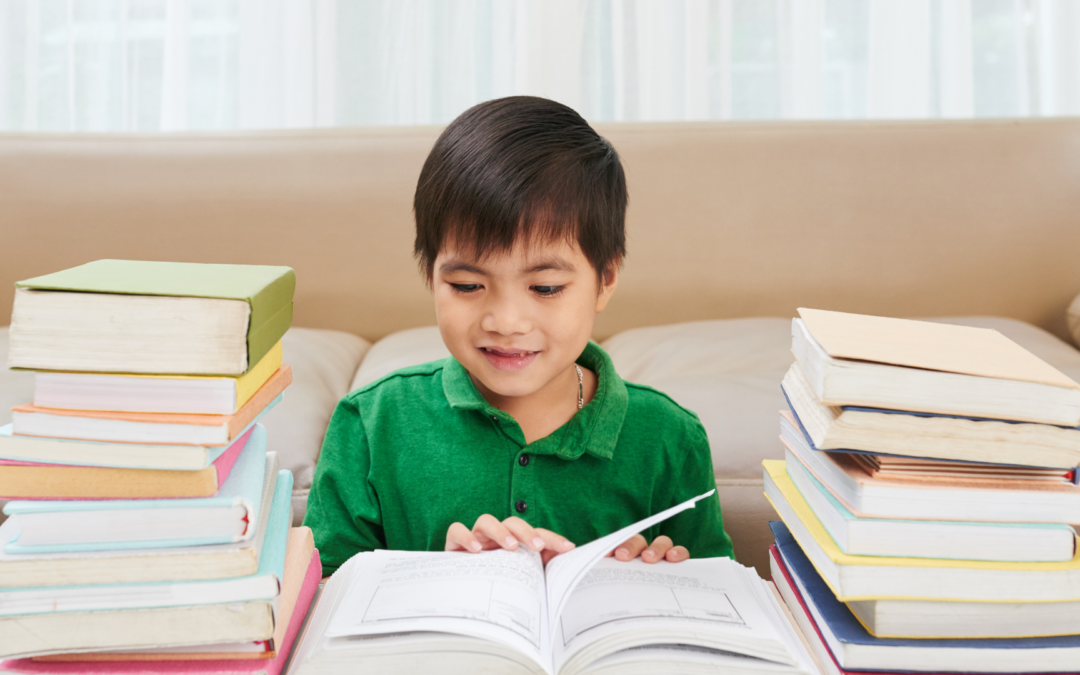
Gifted children exhibit exceptional abilities or potential in one or more specific areas compared to their same-age peers. These children often demonstrate advanced thinking, reasoning, and judgment skills, which makes it crucial for them to receive appropriate educational support. Identifying giftedness early can help your child fully develop their talents and reach their potential.
If you’re asking, “Is my child gifted?” there are several characteristics you can look for to help guide your next steps.
Key Signs Your Child May Be Gifted
Gifted children tend to display a number of unique characteristics, including:
-
Advanced vocabulary: Your child uses more sophisticated words and can express ideas clearly and precisely.
-
Exceptional reading ability: Gifted children often begin reading at an early age and comprehend complex texts quickly.
-
Independence: A strong drive for independence and a desire to solve problems on their own.
-
Exceptional memory: These children typically have a sharp memory and can recall detailed information with ease.
-
Creativity: Gifted children think outside the box, often coming up with novel ideas or solutions.
-
Constructive self-criticism: They can reflect on their work, acknowledge mistakes, and strive for improvement.
-
Sense of humour: An advanced, often mature sense of humour, appreciating nuance and complexity.
-
Advanced social skills: Exceptional communication skills and the ability to relate well with others, sometimes across different age groups.
If you notice these traits in your child, they may be displaying signs of giftedness. However, a formal psychological assessment can provide a clearer picture.
Why Psychological Assessments Are Crucial for Gifted Children
Early identification of giftedness is essential for ensuring that children receive the right academic and socio-emotional support. Psychological assessments for giftedness are designed to evaluate a child’s intellectual potential and help determine whether they meet the criteria for gifted education.
Here’s how psychological assessments typically work:
IQ Testing for Gifted Children
An IQ test is often used to assess a child’s cognitive abilities. For a child to be identified as gifted, they generally need an IQ score of 130 or higher — this means their intellectual ability is greater than 95% of children their age.
The most commonly used and reliable IQ test for children is the Wechsler Intelligence Scale for Children – 5th Edition (WISC-V), which is widely used in Australia and provides norms for comparison. IQ testing is most accurate for children aged 6 years and up and helps measure abilities such as:
-
Logical reasoning
-
Problem-solving skills
-
Verbal comprehension
-
Working memory
A higher-than-average IQ score indicates exceptional cognitive abilities and provides insight into your child’s intellectual potential.
Academic Functioning Assessment
In addition to an IQ test, gifted children may benefit from an academic functioning test like the Wechsler Individual Achievement Test – 3rd Edition (WIAT-III). This test assesses how a child is performing academically compared to peers in their grade level. It evaluates areas such as literacy and numeracy to identify any gaps in learning and ensure that the child is receiving the appropriate support at school.
How Gifted Children Behave During Assessments
Gifted children can behave differently during psychological assessments compared to their peers. Because they often find easy tasks unchallenging, they may display:
-
Lack of motivation on tasks that feel too simple or repetitive
-
Increased interest and enthusiasm as tasks become more complex
-
Unconventional approaches to tasks, thinking in imaginative or creative ways
-
Curiosity about the assessment process, asking clarifying questions or engaging in conversations beyond the task at hand
These behaviours are often signs that a child is intellectually advanced, seeking more stimulation from the process.
Parent and Teacher Input: Essential for Identifying Giftedness
While psychological testing is crucial, the insights of parents and teachers play an important role in identifying gifted children. The following factors help to paint a fuller picture:
-
Early development milestones (e.g., early speech, advanced motor skills)
-
Social interactions with peers and adults
-
Behavioural characteristics (e.g., curiosity, independence, persistence)
Collaborating with teachers and observing your child’s behaviour and learning patterns at home can offer valuable information that complements the results of formal assessments.
When to Consider a Gifted Assessment for Your Child
If you suspect your child may be gifted, a formal assessment is an important step to help provide the support they need. Consider an IQ and academic functioning assessment if your child:
-
Shows signs of advanced cognitive abilities, such as an early interest in complex topics or skills far beyond peers
-
Demonstrates frustration or boredom with the standard curriculum
-
Has exceptional abilities in a specific area (e.g., math, language, art)
-
Displays underachievement in school despite having the potential for higher performance
An assessment will give you the information needed to advocate for your child’s needs, ensuring they receive the appropriate educational services and enrichment opportunities.
Get the Support Your Gifted Child Needs
At Eastside Psychology Clinic, I specialise in psychological assessments for gifted children in Sydney. My comprehensive assessments help identify your child’s cognitive strengths and provide recommendations for enrichment, acceleration, and tailored educational support.
If you believe your child may be gifted or are seeking further information, please contact me to discuss. Early identification and support can make all the difference in helping your child reach their full potential.